






The influence of micronage on filter performance: Proper particle size for cost-effective filtration
Micronage greatly determines how well a filter performs in purifying liquids. This parameter, expressed in microns (µm), indicates what particle size a filter still allows through and what is stopped. Choosing the optimal micron rating represents a balance between purity, flow rate and filter system life.
What does micronage mean in liquid filtration?
A micron is a unit of measurement equivalent to one thousandth of a millimeter (0.001 mm). For many industrial applications, particles between 1 and 100 microns are relevant. By comparison, a human hair has a thickness of about 70 microns, while bacteria typically measure between 0.2 and 5 microns.
For filters, the micron value indicates nominal or absolute filter accuracy. For example, a nominal rating of 5 microns means that the filter stops about 85-95% of all particles larger than 5 microns. An absolute rating of 5 microns virtually stops 100% of particles larger than 5 microns.
The relationship between micronage and filter performance
The selected micron value has direct implications for:
- Pressure drop: The finer the filtration (lower micron rating), the greater the resistance the fluid experiences when flowing through. This resistance translates into pressure drop, which requires additional energy from pumps.
- Flow rate: Filters with lower micron values tend to have lower flow rates because the smaller pores offer more resistance.
- Fouling rate: Finer filters clog faster because they trap more particles, leading to more frequent replacement.
- Purity: The lower the micron value, the purer the final result, but at the expense of other performance factors.
Cut costs by selecting the right micronage
Selecting just the right micron value. Not too coarse and not too fine, can yield significant savings:
- Energy costs: Filters with too low micron values cause unnecessary pressure drop, leading to higher energy consumption of pumping systems.
- Filter replacement: Filters that are too fine are more likely to clog, leading to more frequent replacement. In industrial systems, the cost of filter elements and production downtime can add up quickly.
- Production quality: Filters that are too coarse may allow contaminants to pass through that can cause damage to equipment or finished product. This leads to repair costs that often far exceed the investment in better filtration.
Micronage and filter types: which fits which system?
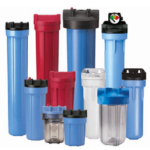
Micronage is not universally applicable across all filter types. Each system has its own range and limitations. Here is an overview of the most commonly used filtration techniques at JMF:
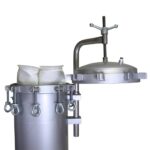
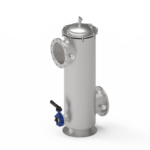
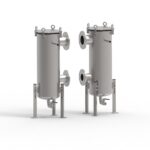
Bag filters (Bag filters)
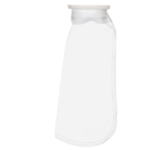
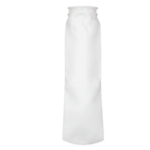
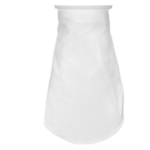
- Micron range: 1 – 200 microns (nominal & absolute)
- Advantages: Affordable, quickly replaceable, large dirt collection volume
- Typical use: Process water, cooling water, rinse water
Choose lower micronages for fine dirt (e.g., pigment, microplastics) and higher ones for coarser dirt (such as sand, rust).
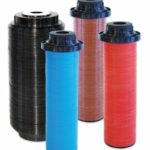
Cyclone filters / Hydrocyclones
- Micron range: No exact micronage, but effective from ±30-100 microns
- Advantages: No replacement parts, low maintenance
- Typical use: Sand separation, well water, site water
Not suitable for fine particles below ~30 microns, but ideal for large flow rates and coarse contamination.
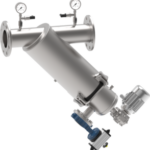
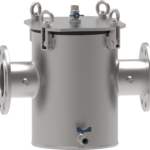
Strainers (Simplex / Basket)
- Micron range: 50 – 3,000 microns (depending on perforation)
- Advantages: Reusable, quick cleaning, coarse filtration
- Typical use: Pump protection, industrial plants, wastewater
Choose strainers for coarse contamination or as a pre-filter before finer systems such as bag filters.
tip: Combination filtration is used in many installations. For example:
- Cyclone filter as coarse separator
- Bag filter for fine finishing
- Strainer as protection of pumps or installations
Customized advice for optimal micronage
The correct micronage depends on several factors: type of fluid, degree of contamination, desired purity, flow rate and available pump pressure. A general rule does not exist – each application requires specific analysis.
Want to know which micronage is optimal for your filtration challenge? Our specialists will be happy to help. With more than 30 years of experience in liquid filtration, we can determine exactly which filtration accuracy best suits your specific application.
Do you have questions about the right micronage for your process? Contact one of our experienced filtration specialists.

Marc Jansen



 Expert Filtration Solutions at Your Fingertips
Seeking expert advice on oil and gas industry filters? Reach out to us for a customized solution and quote. Our team of filter specialists is ready to assist you around the clock.