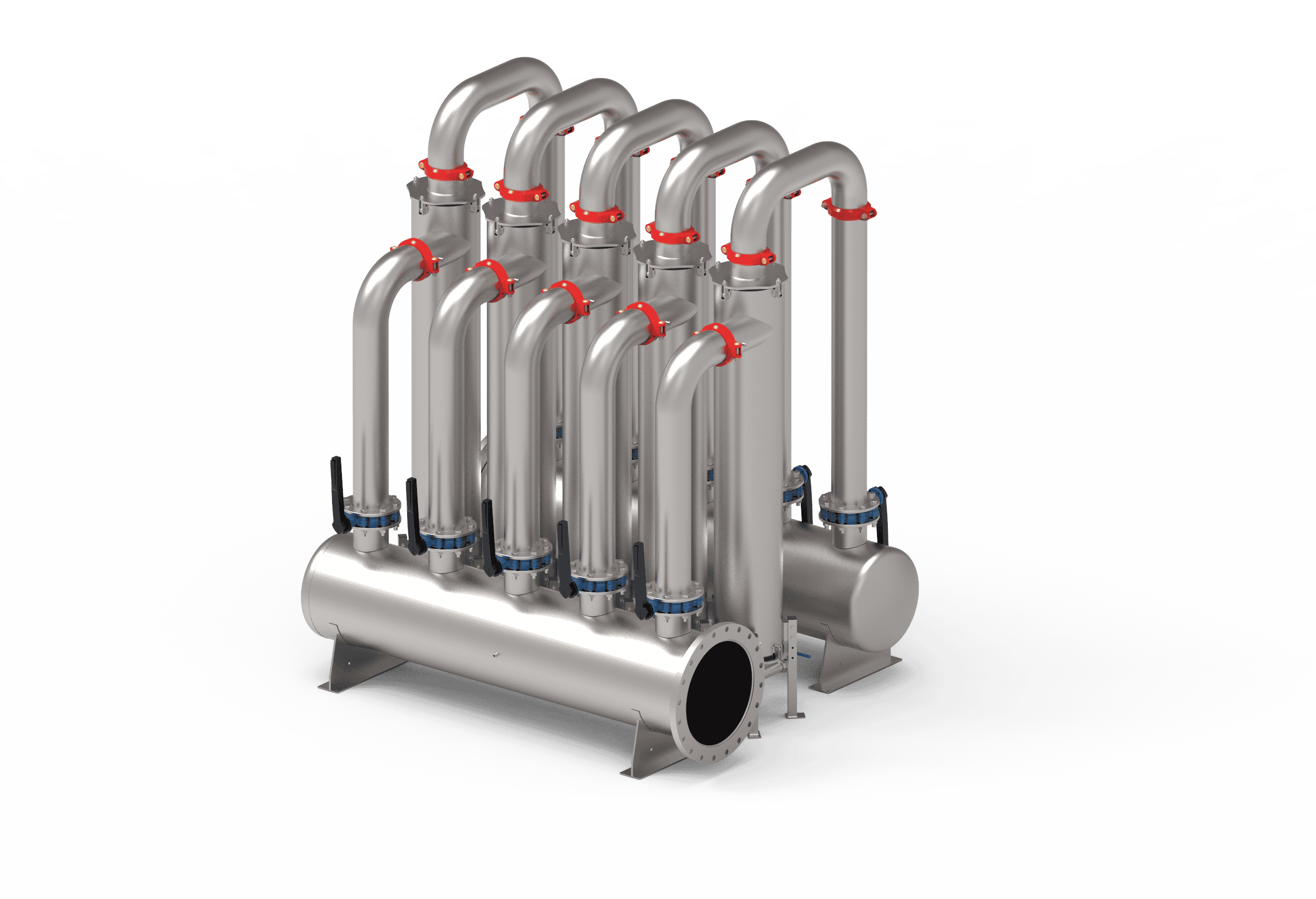
What is a Cyclone Separator
This filtration system belongs to the category of cyclonic filters and is designed to effectively remove solids from liquid streams. When used in combination with either a vortex cyclone filter or hydrocyclone filter, its efficiency can be maximized. The unit is uniquely efficient in water-shell separation, and the technology finds utility in nearly every industry.
During cyclonic filtration, the system introduces the liquid into the separator tangentially, creating a centrifugal flow that pushes the solids to the outer edge of the filter. The captured dirt is later transferred downwards for depositing. It can even be automated by a differential pressure or time-controlled valve, which will keep the drain under a continuous flush.
The efficiency of this separator is between 85% to 92%. If multiple separators are arranged in series, the efficiency can be increased. The cleaned liquid, free of sediment and heavier particles, then moves into the core of the filter before discharge. This underlines the reliability and safety of all materials used in the filter, as approved by the FDA.
Applications
Our cyclonic water separator can be used to remove solid particles from a diverse range of water streams, including:
- Water from wastewater treatment processes
- Natural spring water
- Water collected from surface sources
- Water in manufacturing processes
- Water used for cooling
- Water gathered from terrain or land drainage
- Leachate or landfill runoff water
Industries in which Cyclone Separators are used
These filters provide a versatile solution for separating solids from liquid streams across a wide range of industries, including:
- The petrochemical sector where it aids in the filtration of intake water, utility water, wastewater, and cooling water.
- The industry offshore, mainly in oil and gas, uses it as injection water, ballast water, and flushing of the pipelines.
- The purity of ingredients and products is guaranteed within the food and beverage industry and used for agricultural and greenhouse construction, it helps keep up with water quality.
- WWTPs or sewage treatment plants with increased efficiency in processing waste.
- The liquid waste management industries are involved in a proper waste processing system.
- The chemical industry, in general, applies safe, effective liquid chemical processes.
- The steel industry contributes to the cleanliness of water-based processes.
- The automotive industry where should go a long way toward the optimization of water-related processes in vehicle production.
However, it may also have an application in other industries that need a filtration system for their methods to be effective and reliable.