


Filtration Solutions for the Food & Beverage Industry
Filtration plays an important role in food and beverage production. Process water, liquid ingredients and product streams can contain unwanted solids that need to be removed at different stages of the production process. Effective filtration in the food industry helps achieve the required level of particle removal for each application.
The right filtration solution depends on what needs to be removed, the characteristics of the liquid and the operating conditions. JMF-Filters supplies filtration solutions for different stages of food and beverage processing, from removing larger solids to finer liquid filtration.
Why is filtration important in food and beverage processing?
Particles can enter a production process through water, raw materials and liquid ingredients or arise during processing. These filters remove unwanted solids at the appropriate stage and help maintain the required filtration level throughout production.
The filtration requirement is different for every process. Removing sand or sediment from incoming water, for example, requires a different filtration method than removing fine particles from a liquid ingredient. Understanding the contamination and the required result is therefore essential before selecting a filter.
Where is filtration used in food and beverage production?
Filtration can be applied at different stages of the production process. For the food industry, an effective filtration approach depends on where particles enter the system, what needs to be protected and the required quality of the liquid after filtration.
Incoming and process water
Water is used for processing, rinsing, cleaning and other production activities. Depending on its source, it may contain sand, sediment or other suspended solids. Filtration can remove these particles before the water reaches the production process or sensitive equipment. The required filtration level depends on the water quality and its intended use.
Liquid ingredients and product streams
Liquid ingredients, intermediate products and final product streams may require filtration to remove unwanted solids. The characteristics of the liquid are important when selecting the filter. A low-viscosity liquid passes through a filter differently from a thicker product, affecting factors such as pressure drop, achievable flow rate and required filtration area.
Protection of process equipment
Filters can also be installed specifically to protect downstream equipment. Solid particles can block spray nozzles, accumulate in heat exchangers or interfere with pumps and valves. Installing an appropriate filter upstream can reduce the amount of contamination reaching these components and help maintain reliable operation.
Recirculation and utility water
Water that circulates within a production installation can collect solids over time. Where the process allows recirculation, filtration can remove these particles before the water returns to the system. The amount and type of contamination, required flow and whether filtration can be interrupted for cleaning all influence the most suitable configuration.
How do you choose the right food processing filter?
Selecting a filter starts with the process rather than a particular filter technology. The characteristics and viscosity of the liquid, particle size and concentration, required micron rating, flow rate, operating pressure and temperature all determine the appropriate filtration technology, filter medium and system configuration. Available installation space and cleaning or maintenance requirements should also be considered, as selecting a filter solely on micron rating is not sufficient.
Food-grade filtration and material selection
For food applications, material selection is important because the filter housing, filter media, seals and other components may come into direct contact with the product. These materials must be suitable not only for the liquid being filtered, but also for the temperatures and cleaning agents used during production and cleaning. Certain liquids can cause corrosion, while cleaning agents may affect seals or other components. Considering these conditions in advance helps determine a combination of materials that is suitable for the complete application.
Sanitary filtration systems and hygienic design
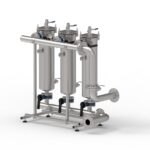
For sanitary filtration systems, removing the required particles is only part of the process. The system must also be designed for effective cleaning and to minimise areas where product residues can accumulate. Surface finish, connections, seals and drainage are therefore important considerations, particularly in areas that are difficult to reach during cleaning.
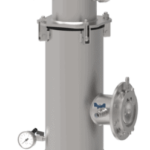
A stainless steel filter housing should not automatically be considered a sanitary filtration solution: the complete design must meet the hygiene and cleaning requirements of the production process.
Which filtration solution fits your process?
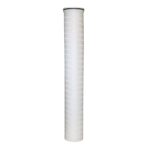
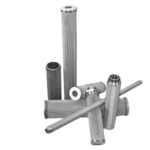
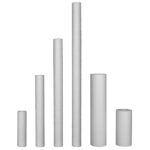
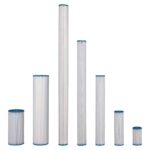
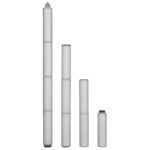
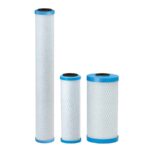
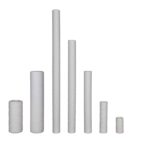
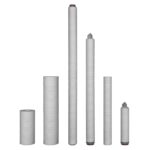
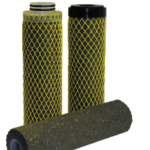
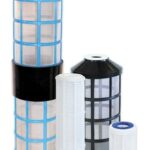
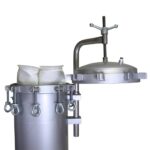
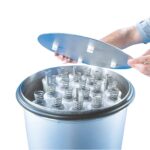
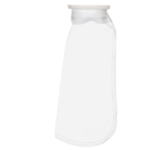
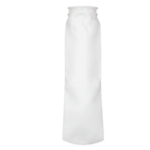
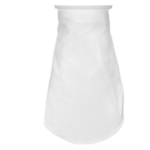
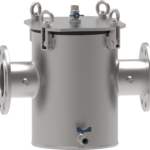
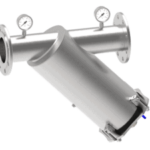
The type of contamination and the required filtration level largely determine which filtration technology is suitable. Bag filters are suitable for general liquid filtration and applications with higher solids loads due to their dirt-holding capacity, while cartridge filters can be used when finer filtration is required. Strainers provide a robust solution for removing larger solids and can be used as pre-filtration to protect downstream equipment.
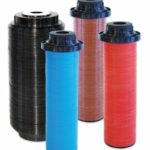
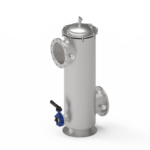
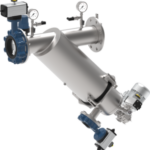
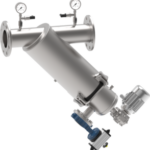
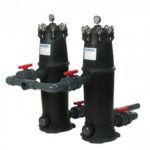
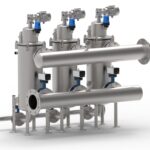
When solids continuously enter the liquid stream, a self-cleaning filter can reduce the need for manual cleaning and support continuous operation. Cyclone separators can be used to separate heavier solid particles from a liquid stream using centrifugal force, without replaceable filter media. These technologies can also be combined within one process, for example by removing larger particles first and applying a finer filtration stage afterwards.
Filtration solutions from JMF-Filters
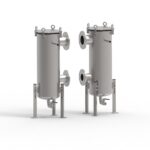
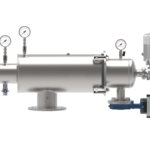
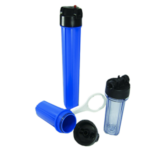
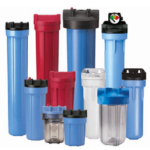
JMF-Filters supplies filter housings, filter bags, filter cartridges, strainers, self-cleaning filters and cyclone filtration solutions for industrial liquid applications. Based on your process conditions and filtration requirements, our filtration specialists can help determine the appropriate filter technology, filter medium and system configuration for your food or beverage production process.
Not sure which filtration solution is right for your process? Contact JMF-Filters for technical advice based on your process conditions and filtration requirements.

Marc Jansen
 Expert Filtration Solutions at Your Fingertips
Seeking expert advice on oil and gas industry filters? Reach out to us for a customized solution and quote. Our team of filter specialists is ready to assist you around the clock.