


Filtration in seawater applications: challenges and best practices
Seawater is widely used in marine, offshore and industrial processes, for example as cooling water, process water or feed water for desalination. Before it can be used effectively, however, suspended solids and other contaminants often need to be removed. Sand, sediment, organic matter, shell fragments and other particles can affect equipment and reduce process efficiency.
Effective filtering of seawater helps protect pumps, valves, heat exchangers and other downstream equipment from contamination and unnecessary wear. Because water quality and operating conditions differ between applications, the filtration solution should always be selected according to the actual process requirements.
Why Is Seawater Filtration Challenging?
Filtering seawater presents several challenges that need to be considered when designing a reliable filtration system. The concentration and type of suspended solids can vary significantly depending on the location, season, water intake and surrounding environment.
Coastal or shallow water, for example, may contain relatively high concentrations of sand, silt, algae and organic material. Offshore installations can face different contamination depending on their location and intake depth. Changes in weather and currents can also cause sudden increases in the amount of suspended material entering the system.
The saline environment creates an additional challenge. Components that are continuously exposed to seawater need to withstand corrosive conditions. Both filtration performance and material compatibility therefore need to be considered when selecting a suitable system.
How Does Seawater Filtration Work?
Mechanical filtration separates solid particles from seawater before they can reach sensitive downstream equipment or subsequent treatment stages. Depending on the application, particles can be retained by a screen or filter element or separated using centrifugal force.
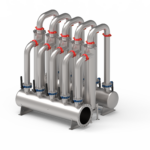
The required filtration rating depends on the contaminants present and the equipment that needs protection. Coarse filtration can remove larger debris and particles, while finer filtration may be required further downstream. In some installations, several filtration stages are combined to gradually remove contaminants of different sizes.
For this reason, seawater filtration systems should be designed around the actual water quality and process rather than around a standard filtration rating.
Choosing the Right Seawater Filters
Selecting suitable seawater filters starts with understanding the process conditions. Important parameters include particle size and concentration, flow rate, operating pressure, required filtration rating and the expected dirt load.
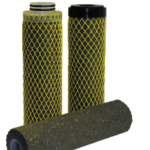
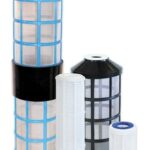
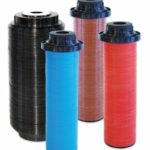
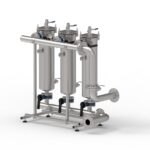
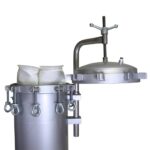
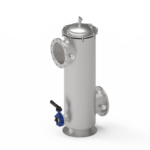
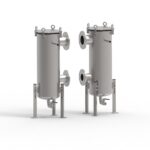
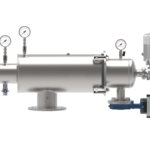
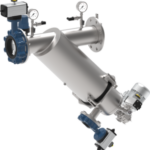
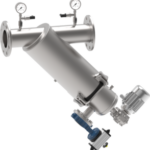
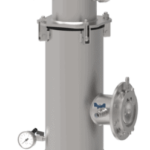
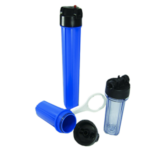
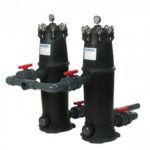
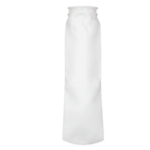
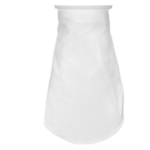
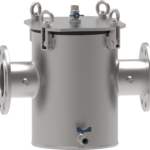
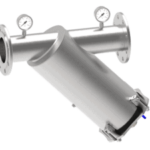
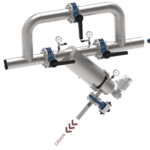
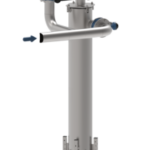
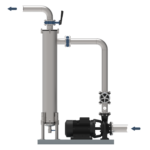
Different filter technologies can be used depending on these conditions. Basket filters and strainers can provide effective mechanical separation of larger particles. Cyclone filters can be suitable for separating relatively heavy solids such as sand, while self-cleaning filters can offer advantages in continuous processes or applications with higher dirt loads.
Maintenance requirements should also be considered. A manually cleaned filter may be practical where contamination is limited and maintenance can easily be scheduled. In processes where interruption needs to be minimized, an automatic or continuously operating solution may be more suitable.
The correct choice therefore depends on the characteristics of both the seawater and the industrial process in which the filter is installed.
Materials for Seawater Filtration Systems
Material selection is particularly important in seawater environments because dissolved salts, including chlorides, can contribute to corrosion. Filter housings, screens, internal components, seals and other wetted parts should therefore be selected according to the specific operating conditions.
Stainless steel and Duplex grades can be used for certain seawater applications, but suitability depends on factors such as water composition, chloride concentration, temperature and operating conditions. Material selection should therefore not be based on seawater exposure alone.
Choosing suitable materials can contribute to reliable operation and a longer service life while reducing the risk of premature component failure.
Marine and Industrial Seawater Filtration Applications
Seawater is used in a broad range of industrial environments. The purpose and required level of filtration can differ considerably between these applications.
In marine applications, filters can be used to remove suspended solids before seawater enters cooling or other onboard systems. Offshore facilities may require filtration for cooling, process or utility water, while industrial plants can use filtered seawater as part of their production processes.
Other common applications include aquaculture, seawater intake systems and pre-treatment for desalination. In desalination installations, mechanical filtration can help reduce the amount of suspended material reaching subsequent treatment stages.
Each application places different demands on filtration capacity, filter rating, materials and maintenance. These factors should be assessed before selecting the filtration equipment.
Best Practices for Reliable Seawater Filtration
Reliable filtration starts with analysing the seawater and process conditions before choosing a filter. Particle size, concentration and type should be assessed together with the required flow rate, pressure and filtration rating.
The system should also be designed for changes in contamination levels. A filter that performs well under normal conditions may require more frequent cleaning when the dirt load suddenly increases. Providing sufficient filtration capacity can help the installation cope with these variations.
Pressure differential should be monitored where relevant, as an increasing pressure drop can indicate that the filter requires cleaning. For applications with continuous or high dirt loads, self-cleaning technology can reduce the need for manual intervention.
Finally, maintenance accessibility should be considered during system design. Filter elements, baskets and other components that require inspection or cleaning should be accessible without creating unnecessary process downtime.
Finding the Right Seawater Filtration Solution
There is no single filtration system that is suitable for every seawater application. The correct solution depends on the water quality, type and quantity of contamination, required filtration rating, flow rate, operating conditions and maintenance requirements.
A properly selected system can help remove unwanted solids before they reach downstream equipment, supporting reliable and efficient operation. This makes it important to evaluate the complete process rather than selecting a filter based only on connection size or filtration rating.
JMF-Filters B.V. supplies filtration solutions for a wide range of industrial and marine applications. Our filterspecialists can help determine a suitable solution based on your seawater, contamination and process conditions. Contact JMF-Filters for advice on the right filtration solution for your application.

Marc Jansen
 Expert Filtration Solutions at Your Fingertips
Seeking expert advice on oil and gas industry filters? Reach out to us for a customized solution and quote. Our team of filter specialists is ready to assist you around the clock.