



How to Select the Right Filter Media for Industrial Filtration
What is filter media?
Filter media is the material inside a filtration system that physically separates contaminants from a liquid stream. While the filter housing contains the pressure and directs the flow, the filter media performs the actual filtration work. Filter media can remove suspended solids, dirt particles, rust, scale, fibres, organic contamination and process residues.
Different liquid filtration applications require different filter media depending on the fluid, contamination load, operating conditions and required filtration efficiency. The main categories are surface filter media, depth filter media, pleated filter media and metallic filter media. Each type offers different characteristics regarding pressure drop, dirt holding capacity, cleanability and filtration precision.
Main filter media types used in process filtration
Surface filter media
Surface filter media captures contaminants on the surface of the filter material. Particles larger than the pore size remain on the outside layer while the clean liquid passes through. This type of medium offers high filtration precision, low particle migration, relatively easy cleaning and predictable, consistent filtration performance. Typical examples include woven mesh, membrane filters and screen filters. Surface filtration is commonly used in fine filtration, polishing filtration and applications with lower contamination loads. Because contaminants remain on the surface, pressure drop can increase relatively quickly under heavy contamination.
Depth filter media
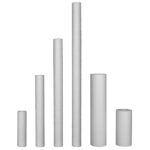
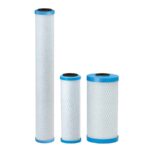
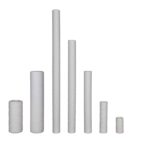
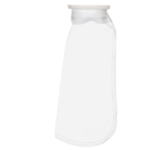
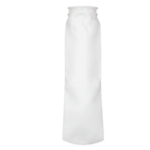
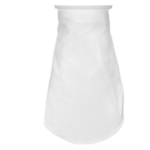
Depth filter media captures particles throughout the entire thickness of the filter material, not just on the surface. This provides higher dirt holding capacity, longer service intervals, improved retention of variable particle sizes and slower pressure drop development. Common examples include melt-blown filter cartridges and needle felt filter bags. Depth media is widely used in process water filtration, chemical filtration, oil filtration and cooling water systems. For applications with moderate to heavy contamination loads, depth filtration often provides the most economical long-term solution.
Pleated filter media
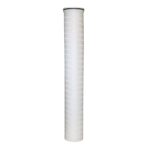
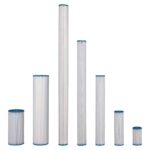
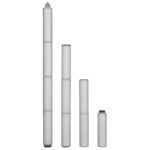
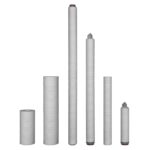
Pleated filter media increases the effective filtration surface area by folding the filter material into a compact design. Compared to non-pleated media, pleated designs offer lower pressure drop at the same flow rate, higher flow capacity, longer service life and compact installation dimensions. The increased filtration area reduces flow velocity through the media, helping maintain lower differential pressure over longer operating periods. Pleated cartridge filters are widely used where space is limited, high flow rates are required or fine filtration efficiency is critical.
Metallic filter media
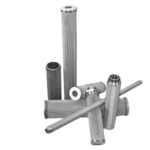
Metallic filter media is designed for demanding process environments involving high temperatures, aggressive chemicals, high mechanical loads or continuous cleaning cycles. Stainless steel mesh is the most common metallic filtration media in industrial use. Its main advantages are excellent temperature and chemical resistance, full reusability, long operational lifetime and compatibility with backwash and chemical cleaning cycles. Typical applications include petrochemical processing, offshore installations and high-temperature process filtration. Metallic filter media is often combined with self-cleaning filtration systems where continuous operation without manual intervention is required.
Common mistakes when selecting filter media
Choosing the wrong filter media is one of the most common causes of poor filtration performance and high operational costs. The following mistakes appear consistently in industrial practice.
Selecting an excessively fine micron rating
Choosing filter media with a micron rating that is too fine for the actual contamination profile causes rapid clogging and excessive pressure drop. Without a proper contamination analysis, many systems become over-engineered and inefficient from the first day of operation.
Ignoring chemical compatibility
Not every filter media material is compatible with every process fluid. Aggressive chemicals, solvents or elevated temperatures may degrade the media structure and reduce filtration performance. Chemical compatibility must always be verified before selecting industrial filter media.
Confusing nominal and absolute filtration ratings
Nominal and absolute filtration ratings are not interchangeable. Misunderstanding the difference can result in insufficient downstream equipment protection. This is covered in more detail in the selection criteria below.
Underestimating the required filter surface area
Insufficient filtration area increases flow velocity through the media, leading to rapid pressure drop increase, shorter service intervals and higher energy consumption.
Selecting based only on purchase cost
The cheapest filter media is rarely the most economical solution over time. Service life, maintenance frequency, downtime risk and energy consumption all contribute to total cost of ownership. Evaluating media on purchase price alone consistently leads to higher overall costs.
Key factors in filter media selection
1. Particle size and micron rating
Micron rating defines the particle size the filter media is designed to retain. The required filtration level depends on downstream equipment sensitivity, process quality requirements and the actual contamination profile of the process fluid.
If contamination data is not available, take a representative fluid sample and have it analysed before specifying the media. This is the single most effective step in avoiding incorrect media selection.
Practical reference values by application:
- 500 µm or coarser: Basic straining of large debris
- 50 – 100 µm: Protection of control valves and heat exchangers
- 10 – 25 µm: Hydraulic systems
- 1 – 5 µm: Fine polishing, food and beverage, pharmaceutical processes
2. Nominal vs. absolute filtration
Nominal filtration means the filter removes a defined percentage (typically 60 to 95%) of particles at the stated micron size. It is a statistical measure, not a guarantee. Particles at or above the nominal rating can and do pass through the filter.
Absolute filtration refers to a highly efficient and validated particle retention performance under standardised test conditions. Absolute-rated filters typically achieve greater than 99% retention at the stated particle size and are often expressed as a Beta ratio, for example β10 ≥ 200, corresponding to approximately 99.5% filtration efficiency.
For applications where downstream equipment protection is critical, where product purity specifications are strict or where regulatory compliance is required, an absolute-rated filter medium is often the preferred solution.
3. Chemical compatibility
The filter media must be chemically compatible with the process fluid across the full operating range, including temperature variations, cleaning cycles and any changes in fluid composition.
| Material | Typical applications |
| Polypropylene | Water treatment, acids, alkalis |
| Polyester | Oils, solvents, process fluids |
| Nylon | Fine filtration, light chemicals |
| Stainless steel (316L) | High temperature, corrosive media |
Incorrect material selection leads to swelling, fibre degradation, reduced filtration efficiency and potential media failure. Always verify compatibility against the specific fluid and operating temperature before specifying.
4. Temperature resistance
Operating temperature directly affects the mechanical integrity and chemical resistance of filter media.
Most polymer-based media have defined upper temperature limits:
- Polypropylene: Up to approximately 90°C
- Polyester: Up to approximately 135°C
- PTFE media: Suitable for chemically aggressive applications and elevated temperatures
- Glass fibre media: Suitable for high-temperature filtration applications
Exceeding these limits causes media degradation and dimensional instability. For high-temperature processes, metallic media or high-performance polymer media should be specified.
5. Flow rate and pressure drop
The filtration surface area must be sufficient to handle the design flow rate without generating excessive pressure drop or flow velocity through the medium. Typical surface load values are 1 to 5 m³/h per m² for bag filters and 0.5 to 2 m³/h per m² for cartridge filters. Always design for peak flow with a safety margin of 10 to 20%.
For detailed guidance on calculating differential pressure and sizing filtration systems correctly, see our articles on pressure drop in filtration systems and industrial filtration system sizing.
6. Dirt holding capacity
Dirt holding capacity determines how much contamination the filter media can retain before reaching maximum allowable pressure drop. A higher DHC means longer service intervals, fewer filter replacements, reduced downtime and lower operational costs. For applications with high contamination loads, depth filter media or staged filtration with a coarse pre-filter upstream significantly extends the life of the fine filter element.
7. Cleanability and reusability
Disposable media is the standard choice for fine filtration, sticky or gelatinous contaminants, and applications with strict hygiene requirements.
Reusable metallic media suits high-temperature processes, continuous operation and heavy contamination loads where the cost of frequent replacement justifies the investment.
Automatic self-cleaning filters are the optimal solution for continuous processes where stopping for manual filter changes would cause unacceptable downtime. Self-cleaning systems maintain consistent, low pressure drop without manual intervention.
Liquid filtration media in practice: industry examples
Water treatment
Polypropylene depth media is the standard choice, offering broad chemical resistance, high dirt holding capacity and competitive cost.
Food and beverage
Hygienic applications require FDA-compliant or EU food-contact approved media. Absolute-rated filtration is typically required to guarantee product purity. Media must also withstand CIP cleaning cycles.
Chemical industry
Chemical compatibility is the primary selection driver. Polypropylene covers most acidic and alkaline applications, while PTFE media is specified for chemically aggressive solvents and oxidising agents.
Oil and gas
Stainless steel mesh and high-pressure resistant cartridge media are standard for offshore and upstream applications. High operating pressures, temperatures and hydrocarbon fluids make metallic or high-performance polymer media the reliable choice.
Process industry
Complex processes typically require staged filtration using multiple media types in series — a coarse depth pre-filter to remove bulk contamination, followed by a fine surface or membrane filter for final product protection.
How JMF Filters helps you select the right filter media
Selecting the right filter media requires accurate process data, application knowledge and experience across a wide range of industries and fluid types.
At JMF Filters, our specialists help you choose the right filter media based on your specific process conditions, flow rates, fluid properties and contamination profile. Our product range covers the full spectrum of filtration media, including:
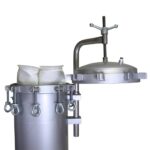
- Filter bags
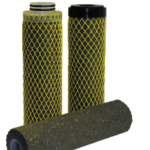
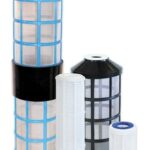
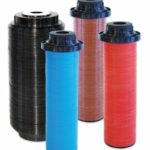
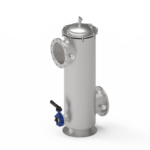
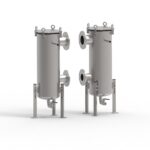
- Cartridge filters
- Strainers
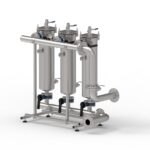
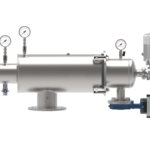
- Automatic self-cleaning filter systems
All products are sourced from European manufacturers to guaranteed quality standards.
Whether you are specifying a new filtration system, troubleshooting excessive pressure drop or looking to extend service intervals in an existing installation, we have the technical expertise and the product range to support you.
Contact our filtration specialists to identify the right filter media for your process conditions and filtration requirements.

Marc Jansen



 Expert Filtration Solutions at Your Fingertips
Seeking expert advice on oil and gas industry filters? Reach out to us for a customized solution and quote. Our team of filter specialists is ready to assist you around the clock.