


Retrofit Filtration System: When and Why It Makes Sense
Industrial filtration systems rarely fail overnight. Instead, performance gradually declines. A housing that once operated for months between servicing may suddenly require weekly maintenance, energy consumption increases, and filter replacement costs continue to rise. At some point, every plant manager faces the same question: repair, replace, or retrofit?
A full system replacement is often assumed to be the only serious option, but it’s rarely the most cost-effective one. In many cases, a retrofit filtration system, where existing housings and infrastructure are upgraded with modern internals, controls, or filter media, delivers most of the performance gain at a fraction of the cost and downtime.
What Is a Retrofit Filtration System?
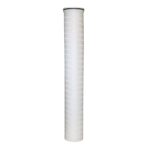
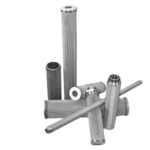
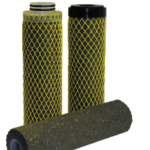
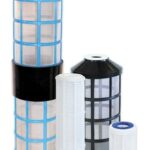
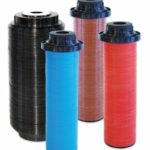
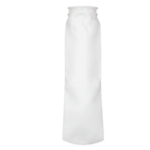
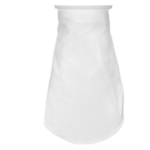
A retrofit is not a patch job. It typically means modernizing filtration equipment while keeping the parts of the installation that still function well. Common examples include replacing outdated filter elements with modern, higher-efficiency media, or upgrading manual systems to self-cleaning or automated backwashing. Other options include improving housing internals for better flow distribution, adding monitoring instrumentation such as differential pressure sensors and flow meters, or reconfiguring piping to accommodate higher throughput.
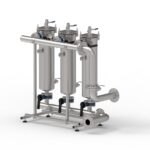
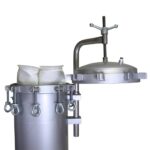
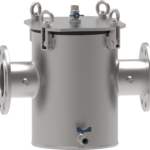
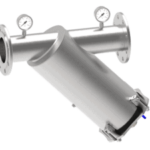
The existing pressure vessel or housing frame is often reused, which is precisely what keeps a retrofit faster and cheaper than a ground-up replacement. Companies often choose to upgrade industrial filtration equipment because the existing pressure vessel remains structurally sound while the internal components no longer meet today’s process requirements.
When Should You Upgrade Industrial Filtration Equipment?
Not every ageing system needs intervention immediately. These are the indicators worth acting on.
Reduced filtration performance and rising energy consumption
As filter media clogs faster or flow paths become inefficient, pumps work harder to maintain pressure. A steady upward trend in energy draw for the same process load, or a gradual decline in filtration efficiency, is one of the clearest signs that the system is due for filtration system modernization.
Increasing filter replacement frequency
If replacement intervals have shortened significantly compared to the original specification, the filtration stage may be undersized, mismatched to current process conditions, or simply outdated.
Higher production capacity
Many industrial facilities expand production over the years. An installation sized for an earlier process load may now run with higher pressure drops or restricted flow capacity. Retrofitting allows the system to accommodate increased throughput without redesigning the complete process line.
New environmental or quality requirements
Industries continue to face stricter regulations regarding emissions, wastewater treatment, and product quality. Upgrading existing systems with modern filtration system components often provides the higher separation efficiency needed to meet current standards, without replacing the installation outright.
More frequent unplanned downtime
Ageing housings, worn seals, and degraded internals increase the likelihood of failures that stop production. Downtime costs in process industries are rarely trivial, and they tend to increase as equipment ages.
Obsolete or hard-to-source components
When replacement parts for older systems become difficult to obtain, or a supplier no longer stocks compatible filter elements, that alone is a strong argument for filtration modernization.
Why Should You Upgrade Instead of Replace?
Lower Capital Cost
Reusing existing housings, piping, and structural supports significantly reduces the investment required compared to installing a completely new filtration system.
Shorter Installation Time
Filtration system upgrades typically require less engineering and construction work, meaning less production downtime during implementation.
Immediate Efficiency Gains
Modern filtration systems are engineered for lower pressure drop and higher dirt-holding capacity. Upgrading internals or filter media alone can noticeably reduce energy consumption and extend service intervals.
Reduced Total Cost of Ownership
A retrofit that addresses the specific weak points of a system, rather than replacing everything, often improves the balance between upfront cost and long-term operating expense more effectively than starting from scratch. Depending on the condition of the existing installation, a retrofit can often deliver a relatively short payback period through lower energy consumption, reduced maintenance, and fewer production interruptions.
Lower Project Risk
Modernizing filtration equipment within an existing footprint avoids the civil works, permitting, and integration risks that come with installing an entirely new system.
When Does a Full Replacement Make More Sense?
Retrofitting is not always the right answer. Full replacement should be considered when the housing or pressure vessel itself shows structural wear, corrosion, or fatigue that compromises safety; when process requirements have changed so significantly that the original housing size or configuration can no longer accommodate them; when the cost of upgrading outdated infrastructure approaches or exceeds the cost of new equipment; or when regulatory or industry standards require certification that older equipment cannot meet, even after modification.
An honest technical assessment, rather than a default assumption in either direction, is what determines which path delivers better long-term value.
Which Industries Benefit From Modern Filtration Systems?
Improving filtration efficiency through a retrofit is relevant across a wide range of process industries. Whether the application involves water treatment, chemical processing, food & beverage, or oil & gas, the objective remains the same: reliable filtration that supports efficient, continuous production. Each industry has its own contamination profile and regulatory context, but the underlying logic is the same: matching filtration capacity and efficiency to current process conditions, rather than the conditions the system was originally designed for.
How Should You Approach a Retrofit Decision?
Before committing to a filtration system upgrade, a few questions are worth answering:
- What is actually underperforming? Energy use, replacement frequency, and downtime each point to different root causes and different solutions.
- Has the process changed since the original design? Flow rates, particle loads, and product specifications all affect what “correct” filtration looks like today.
- What is the condition of the housing itself? A structurally sound vessel usually means the performance gain lies in what’s inside it, not in the housing.
- What is the realistic payback period? Energy savings, reduced downtime, and lower filter consumption should be weighed against the retrofit investment over a realistic operating horizon.
A Practical Path Forward
Upgrading industrial filtration doesn’t have to mean starting over. In most cases, what’s already in place can carry a plant through another decade of reliable operation, provided the right components are selected for current process conditions.
JMF-Filters advises industrial operators on whether a targeted retrofit or a complete replacement offers the best long-term solution. Every recommendation is based on the condition of the existing installation, process requirements, and operational objectives.
Our filtration specialists assess existing filtration systems and recommend suitable retrofit solutions, including filter elements, self-cleaning technologies, monitoring instrumentation, and other components used in modern filtration systems that improve reliability, efficiency, and service life.
Curious whether a retrofit is the right choice for your installation? Contact JMF-Filters for a technical assessment of your existing filtration system.

Marc Jansen



 Expert Filtration Solutions at Your Fingertips
Seeking expert advice on oil and gas industry filters? Reach out to us for a customized solution and quote. Our team of filter specialists is ready to assist you around the clock.