
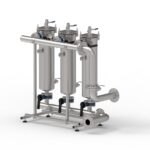
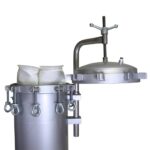
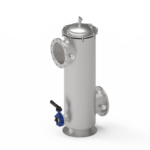

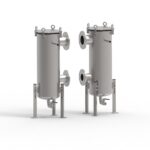
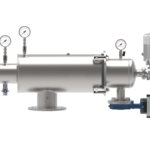
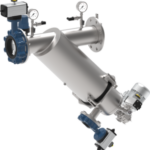
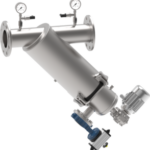
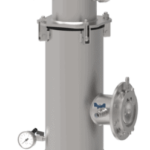

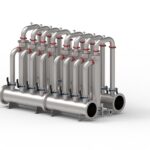
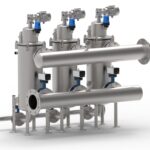

Here’s how a Hydrocyclone Filter works, and why you no longer need a filter element
In a world where filtration must become increasingly smart, sustainable and efficient, one type of filter is rapidly gaining popularity: the hydrocyclone filter. This innovative solution filters solids from liquids without the use of a filter element. No clogs, no replacement costs, just smart physics. But how exactly does such a system work? And when […]
In a world where filtration must become increasingly smart, sustainable and efficient, one type of filter is rapidly gaining popularity: the hydrocyclone filter. This innovative solution filters solids from liquids without the use of a filter element. No clogs, no replacement costs, just smart physics.
But how exactly does such a system work? And when is a Hydrocyclone Filter the right choice for your application?
What is a Hydrocyclone Filter?
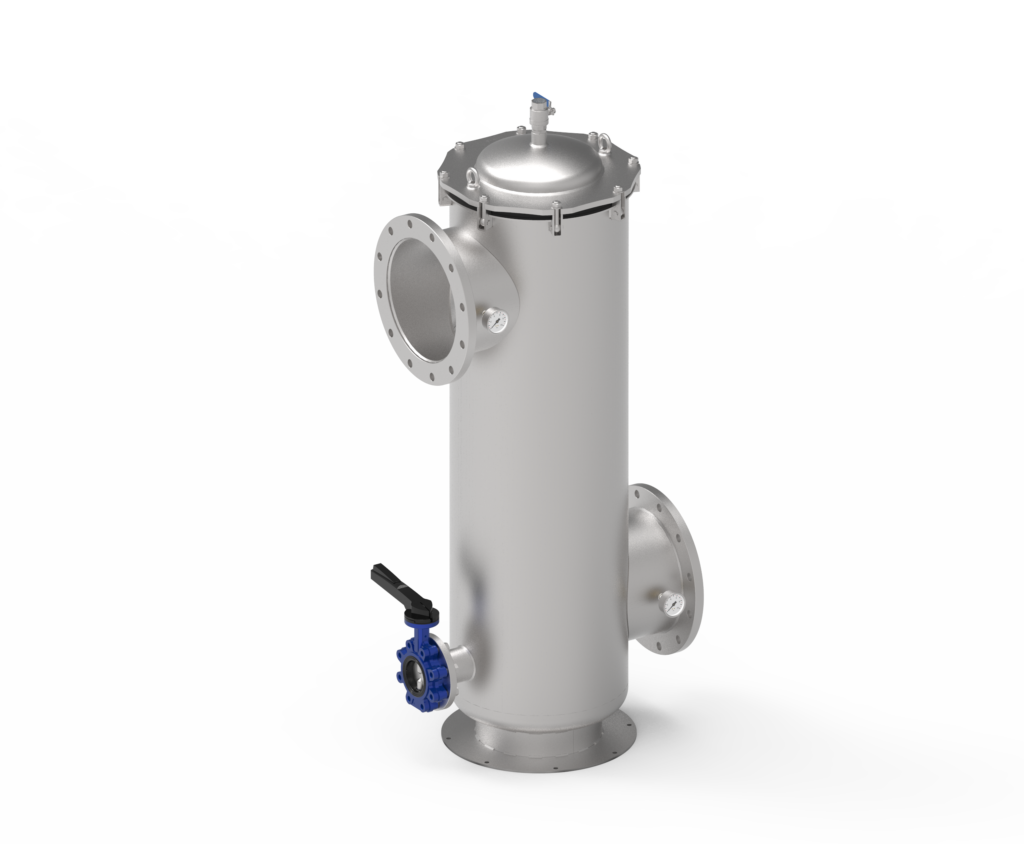
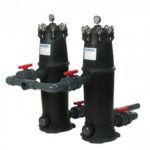
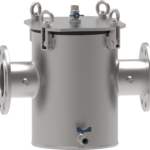
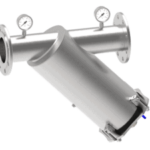
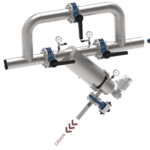
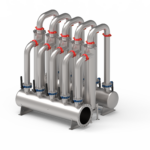
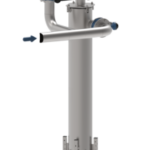
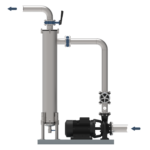
A hydrocyclone filter is a mechanical separation system that uses centrifugal force to remove heavy solid particles (such as sand, silt or gravel) from a liquid stream.
Unlike traditional filters (such as bag filters or strainers), a Hydrocyclone Filter does not use a filter element that can get clogged or require regular replacement. Instead, everything revolves around flow, velocity and gravity.
How does a Hydrocyclone Filter work?
The principle is surprisingly simple and very effective:
- Tangential inflow
Liquid enters the filter housing at an angle, creating a circular flow (vortex effect). - Centrifugal separation
This rotation pushes the heavier solid particles (such as sand or gravel) to the outside of the flow. - Segregation & drainage
The heavy particles are directed to the bottom of the filter, where they accumulate in a collection chamber. They can be discharged periodically or automatically via a flush valve. - Clean water to the outside
The liquid, now free of most solid particles, flows out through the central channel.
What makes a Hydrocyclone Filter unique?
- No clogged filters
There are no elements that clog up. Ideal for high dirt loads. - Low maintenance
Dirt removal is done manually or automatically. You save on man-hours and parts. - Constant flow
Because there is no filter surface clogging, the flow remains steady. - Sustainable & cost-effective
Less waste, no replacement parts, and longer life.
Typical Applications of Hydrocyclone Filters
Hydrocyclones are widely used in industries where heavy solids occur in water streams:
| Application | Sector |
| Sand Removal | Water treatment, drinking water, WWTP |
| Filtering sludge and grit | Petrochemical, offshore, chemical |
| Protection pumps | Industry, greenhouse construction, process plants |
| Prefiltration | Food, tank flushing |
When is a Hydrocyclone Filter not suitable?
Although powerful, a Hydrocyclone Filter is not a panacea. It is important to note that it is less suitable for removing very fine particles (<20 microns) or lightweight substances such as greases or oils.
Solution: Combine with a bag filter or self-cleaning filter for finer or specific contamination.
Comparison with traditional filters
| Feature | Hydrocyclone filter | Bag filter / Strainer |
| Filter element needed? | No | Yes |
| Maintenance | Low | High (replacement, cleaning) |
| Suitable for fine particles? | Limited (>30 microns) | Yes (1-200 microns possible) |
| Installation costs | Average | Bearing |
| TCO (Total Cost of Ownership). | Long-term low | Higher with intensive use |
Conclusion: when to choose a Hydrocyclone Filter?
Choose a Hydrocyclone Filter if you:
- Deal with coarser contamination such as sand, gravel or silt
- Want to handle high flow rates without pressure loss
- Want to reduce maintenance frequency and costs
- Seeking a durable and robust system without consumable parts
For additional fine filtration or industry-specific requirements, a combination with other filters is ideal.
Need advice?
Want to know if a Hydrocyclone Filter is right for your process? Or are you curious about combination filtration for maximum efficiency? Our experienced filter specialists are happy to think along with you.
 Expert Filtration Solutions at Your Fingertips
Seeking expert advice on oil and gas industry filters? Reach out to us for a customized solution and quote. Our team of filter specialists is ready to assist you around the clock.