


Lifecycle Cost of Industrial Filtration Systems: Why Purchase Price Is Just the Beginning
When selecting a filtration solution, purchase price is often the first number that appears on a quotation and the first number that gets compared. It is also, in most cases, the least relevant figure for determining what the installation will actually cost your operation over its working life.
The total cost of ownership, including energy consumption, filter replacements, maintenance, and production downtime, typically exceeds the initial investment many times over.
Understanding this cost structure is not simply a financial exercise. It is an operational necessity.
Cost-effective filtration starts with asking the right question: not “What does this system cost?” but “What will this system cost over the next five to ten years?”
Understanding Long-Term Ownership Costs
Total Cost of Ownership (TCO) provides a complete financial picture of owning and operating a filtration installation from commissioning through replacement. This includes every cost incurred throughout the operational life of the installation.
The primary cost components include:
- Initial purchase and installation
- Energy consumption
- Filter media replacements
- Maintenance and labour
- Production downtime
- Waste disposal
In many industrial applications, these operational expenses represent the majority of total ownership costs over a five to ten-year period. The purchase price often accounts for only a small percentage of the total investment.
Understanding total ownership costs allows companies to make decisions based on long-term performance rather than short-term savings.
Why the Lowest Purchase Price Is Not Always the Best Choice
A lower-cost solution can appear attractive during procurement. However, the true cost becomes visible during operation.
Energy consumption, filter replacement frequency, maintenance requirements, and downtime risk often have a greater impact on total operating costs than the initial investment itself.
A system purchased at a 20 to 30 percent premium over a basic alternative can, in many industrial applications, deliver sufficiently lower operating costs to achieve a lower lifecycle cost within just a few years.
This is not an argument for spending more than necessary. It is an argument for evaluating total ownership costs across the full operating period rather than at the point of purchase alone.
The Four Major Cost Drivers
Energy Consumption
Energy is one of the most underestimated contributors to long-term operating expenses.
Every filtration process creates resistance to flow, measured as pressure drop. The higher the pressure drop across the system, the more energy is required to maintain the desired flow rate.
As filter media becomes loaded with contaminants, pressure drop increases. A poorly selected or undersized system can consume significantly more energy than a properly engineered solution. For continuous processes operating 24 hours a day, even a modest increase in pressure drop can generate substantial additional energy costs over several years.
Selecting the correct filtration area, housing size, and filter media specification helps minimise pressure loss and reduce long-term operating expenses.
Filter Replacement Costs
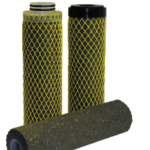
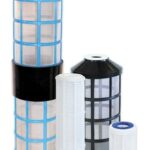
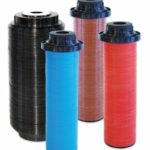
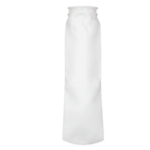
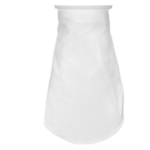
Filter bags, filter cartridges, and other consumable media require periodic replacement. The replacement frequency depends on contamination levels, process conditions, filtration requirements, and media quality.
Undersized systems reach capacity quickly, resulting in frequent change-outs and increased media consumption. Oversized systems may reduce replacement frequency but often introduce unnecessary capital expenditure without delivering significant operational benefits.
Media quality matters as much as replacement frequency.
Lower-grade filter media may carry a lower unit price but deliver inconsistent performance, collapse under differential pressure, or fail to maintain specified retention ratings. The result can be increased replacement frequency and, in more serious cases, process contamination or downstream equipment damage.
When evaluating operating costs, annual media expenditure should be based on realistic operating conditions rather than best-case assumptions.
Maintenance Requirements
Maintenance costs include labour, inspections, cleaning cycles, seal replacements, and scheduled servicing.
These costs are often underestimated during system selection. A filtration system that requires a two-person team and a two-hour production shutdown every three weeks carries a very different maintenance profile than one requiring a single technician for thirty minutes every three months.
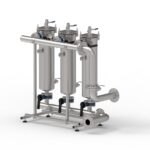
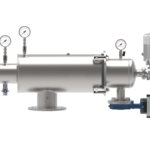
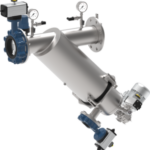
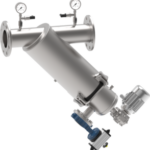
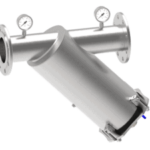
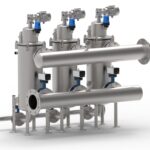
Self-cleaning filtration systems reduce manual intervention by cleaning the filter element during operation, helping to minimise maintenance requirements and production interruptions. While these systems generally require a higher initial investment, the reduction in labour costs and increase in process availability often justify the investment over time.
Production Downtime
Of all the factors that contribute to long-term ownership costs, unplanned production downtime is often the most expensive.
When a filtration solution fails unexpectedly through filter collapse, housing failure, seal leakage, or blocked media, production lines can stop. The cost may include lost output, product loss, emergency maintenance, and the inspection or repair of downstream equipment exposed to contamination.
Even planned downtime carries a cost when production must pause for filter replacement or cleaning.
Reliable filtration solutions reduce both the frequency and duration of downtime events. In many industries, preventing a single unplanned shutdown can justify a significant portion of the total filtration investment.
Reliability is therefore a financial asset, not simply a technical preference.
Evaluating Lifecycle Cost in Practice
Operational assessments consistently show that running costs often exceed the initial purchase price over the life of a system. Energy consumption, filter replacement frequency, maintenance requirements, and downtime risk typically determine the true cost of ownership.
For this reason, systems should be evaluated on their long-term operational performance rather than on purchase price alone. While the exact figures vary by application, the relationship between initial investment and long-term ownership costs remains remarkably consistent across a wide range of applications.
Factors That Influence Filtration Performance and Cost
Filtration performance and operating costs are closely connected. A solution that performs efficiently under actual process conditions typically delivers lower operating expenses, reduced maintenance requirements, and improved reliability over time.
Reliable operation and long-term value depend on selecting a solution that matches the specific requirements of the process. Factors such as flow rate, contamination characteristics, operating conditions, media availability, and material selection all influence both performance and long-term costs.
Key factors include:
Flow Rate and Capacity
A system sized correctly for the actual process flow operates within its design envelope and avoids the energy and performance penalties associated with over- or under-sizing.
Contamination Characteristics
Particle size distribution, contamination concentration, and fluid properties determine the correct media specification and micron rating. Selecting a finer filtration grade than required increases pressure drop and replacement frequency without improving process performance.
Continuous Versus Batch Operation
Continuous processes often benefit from automated or self-cleaning filtration technologies. Batch operations may achieve lower lifecycle costs with conventional filter bags or filter cartridges serviced during planned maintenance intervals.
Media Availability
Readily available filter media reduces supply chain risk and helps minimise downtime caused by delayed deliveries.
Housing and Component Durability
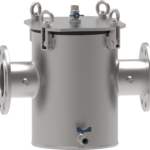
Material selection should reflect the chemical compatibility, temperature, and pressure requirements of the application. Stainless steel, carbon steel, and engineering plastics each offer advantages depending on operating conditions.
How JMF-Filters Helps Reduce Long-Term Operating Costs
Selecting the right filtration solution requires specialist knowledge of both process conditions and filtration technologies.
JMF-Filters advises, produces, and supplies industrial filtration solutions for industries including water treatment, chemical processing, food and beverage production, offshore, oil and gas, and general process industries.
Our filtration specialists help customers evaluate total ownership costs and select solutions that deliver reliable long-term performance, efficient operation, and sustainable cost savings.
Conclusion
The purchase price is only one part of the equation.
In most industrial applications, operational costs have a far greater impact on total ownership cost than the initial investment. Companies that evaluate filtration solutions based on total ownership costs rather than purchase price alone are better positioned to reduce long-term expenses and improve process reliability.
The most economical solution is the one that delivers consistent performance, dependable operation, and the lowest total cost throughout its service life.
For advice on evaluating the lifecycle cost of filtration solutions for your application, contact the filtration specialists at JMF-Filters.

Marc Jansen



 Expert Filtration Solutions at Your Fingertips
Seeking expert advice on oil and gas industry filters? Reach out to us for a customized solution and quote. Our team of filter specialists is ready to assist you around the clock.